Why Heat Stratification Is Costing Warehouses Thousands & How to Fix It
If you manage a warehouse, factory, or any large building with high ceilings, heat stratification is silently driving up your heating bills. Warm air rises to the roof while cold air stays at floor level where your staff work. Here is what it is costing you and how destratification fans fix it.
Heat stratification is one of the most common and costly problems in warehouses, factories, workshops, sports halls, and any large building with high ceilings across the UK. It occurs when warm air produced by your heating system rises to the ceiling and stays there, while cooler air settles at floor level where your staff are working. The result is that you are paying to heat air that sits uselessly at roof height, while the occupied zone at floor level remains cold and uncomfortable.
The good news is that heat stratification is completely fixable. Destratification fans and high-volume low-speed (HVLS) fans are specifically designed to recirculate trapped warm air from ceiling level back down to floor level, recovering the heat you have already paid for and delivering it to where it is actually needed.
What Is Heat Stratification?
Heat stratification is a natural process where warm air rises towards the ceiling while cooler, denser air stays near the floor. In buildings with standard ceiling heights, this effect is relatively minor. But in warehouses, factories, distribution centres, sports halls, and other large industrial buildings with ceiling heights of 6 metres or more, the temperature difference between floor level and ceiling level can be 10 degrees or more.
This means that while the thermostat at ceiling level may show a comfortable temperature, the actual temperature at floor level where people are working, picking, packing, or assembling could be several degrees colder. The heating system responds by running longer and working harder to try to reach the set temperature at floor level, but much of the additional heat it produces simply rises back up to the ceiling again. This creates a cycle of wasted energy, higher fuel bills, and uncomfortable working conditions that never fully resolve.
Heat stratification affects every type of building with high ceilings, including:
-
Warehouses and distribution centres: Large open floor areas with racking that can trap warm air at height
-
Factories and manufacturing plants: Production floors with high ceilings and heat-generating machinery that compounds the problem
-
Transport workshops and vehicle repair bays: Mechanics working at floor level in the coldest part of the building
-
Sports halls and leisure centres: High ceilings with warm air out of reach of players and spectators
-
Aircraft hangars: Extremely high ceilings where the temperature difference can be dramatic
-
Retail showrooms and garden centres: Large open spaces where customer comfort is affected by cold air at floor level
The Hidden Costs of Heat Stratification
Heat stratification is often described as an invisible cost because most building managers do not realise it is happening. The heating system appears to be working normally, the thermostat shows a reasonable temperature, and the energy bills are accepted as the cost of heating a large building. But the reality is that stratification is silently adding thousands of pounds to your annual heating costs.
Increased Energy and Heating Costs
When warm air collects at the ceiling and the floor level stays cold, the heating system must run longer and consume more fuel to try to reach the target temperature at the occupied level. In a large warehouse or factory with high ceilings, this can increase heating costs by 20% to 30% or more compared to a building where the air is properly mixed. For a building spending tens of thousands of pounds per year on gas or electricity for heating, that represents a significant and entirely avoidable cost.
Uncomfortable Working Conditions
Heat stratification creates inconsistent temperatures that directly affect staff comfort and productivity. Workers at floor level experience cold conditions even when the heating system is running at full capacity. Cold floors, cold draughts, and the frustrating feeling that the heating is not working properly all contribute to lower morale, reduced productivity, and increased absenteeism during the winter months. In warehouses with picking and packing operations, cold hands and reduced dexterity can also slow down work rates and increase error rates.
Increased Wear on Heating Equipment
When heating systems run for longer periods to compensate for stratification, they experience more wear and tear. Constant cycling of boilers, warm air heaters, and fans leads to more frequent maintenance, shorter equipment lifespan, and a higher risk of breakdowns during the coldest months when the heating is needed most. The additional running hours also increase the cost of servicing and replacement parts over the lifetime of the equipment.
Higher Carbon Emissions
Wasting energy through heat stratification means burning more fuel than necessary, which increases your building's carbon emissions. For businesses working towards net zero targets, carbon reduction goals, or sustainability commitments, fixing heat stratification is one of the most practical and impactful steps they can take. The energy savings from destratification translate directly into lower carbon emissions with no loss of comfort or performance.
Destratification Fans: The Cost-Saving Solution
The most effective way to fix heat stratification in warehouses, factories, and other large buildings is to install destratification fans. These fans work by recirculating the warm air that has risen to ceiling level back down to the occupied zone at floor level. This simple principle recovers heat that would otherwise be wasted and distributes it evenly throughout the building from floor to ceiling.
The result is a more consistent temperature throughout the building, improved comfort at floor level, reduced heating system running times, lower energy bills, and less wear on the heating equipment. Many UK warehouses and factories report heating cost savings of up to 30% after installing destratification fans.
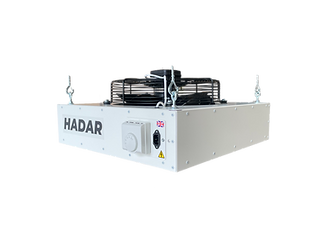
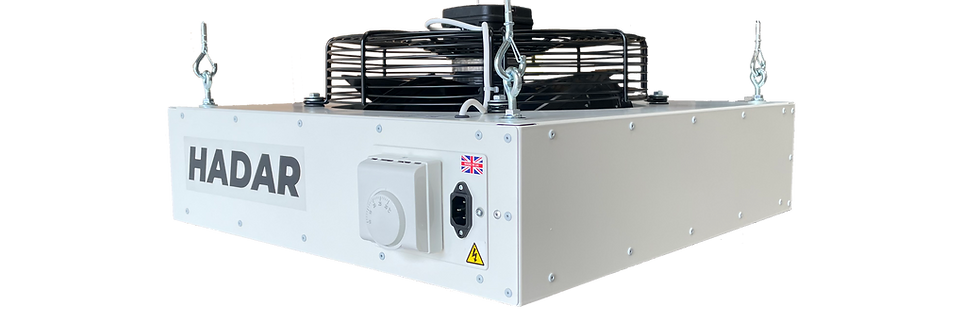
Hadar DSF Destratification Fan
The Hadar DSF destratification fan is designed specifically to eliminate temperature layers in warehouses, factories, workshops, sports halls, and other buildings with high ceilings. It is a compact, ceiling-mounted fan that draws warm air from the ceiling zone and pushes it downward to floor level, creating a continuous mixing effect that prevents stratification from forming.
Key benefits of the Hadar DSF destratification fan for UK warehouses and factories:
-
Recirculates warm air from ceiling level back to floor level, recovering heat that would otherwise be wasted
-
Reduces warehouse and factory heating costs by up to 30% by improving heat distribution
-
Eliminates temperature gradients from floor to ceiling for consistent comfort throughout the building
-
Ideal for warehouses with high racking, logistics centres, distribution hubs, and seasonal heating requirements
-
Compact, ceiling-mounted design that does not take up floor space or interfere with operations
-
Low energy consumption relative to the heating cost savings it delivers
Evel WZ HVLS Fan
For the largest warehouses, distribution centres, and open-plan industrial buildings, the Evel WZ HVLS fan provides powerful destratification across a very wide area. HVLS stands for high-volume low-speed, meaning these large-diameter fans move massive volumes of air at low speed, creating a gentle but effective airflow that mixes the temperature layers across the entire building footprint.
Key benefits of HVLS fans for large warehouses and distribution centres:
-
Moves very large volumes of air with low energy consumption, covering a wide area with a single fan
-
Provides gentle, comfortable airflow that is safe for staff and does not disturb lightweight products or packaging
-
Minimises heat stratification across the entire warehouse or distribution centre footprint
-
Reduces heating costs by allowing the heating system to work more efficiently and run for shorter periods
-
Also provides a cooling effect in summer through increased air movement, delivering year-round value
DSF Destrat Fan vs HVLS Fan: Which Is Right for Your Building?
Both destratification fans and HVLS fans solve the same problem, but they suit different building types and layouts:
-
Building size: DSF destrat fans are ideal for medium-sized warehouses, factories, workshops, and sports halls. HVLS fans are best for the largest open-plan spaces like distribution centres and major logistics hubs
-
Ceiling height: Both work in buildings with high ceilings, but HVLS fans are particularly effective in buildings over 8 metres where the temperature gradient is most extreme
-
Racking and obstructions: DSF destrat fans work well in buildings with high racking because they can be positioned between racking runs. HVLS fans need clear space below for unobstructed airflow
-
Number of units: Multiple DSF fans are typically used across a building, with each one covering a specific zone. A single HVLS fan can cover a much larger area, meaning fewer units are needed in the largest buildings
-
Summer use: HVLS fans provide a noticeable cooling effect in summer through increased air movement. DSF destrat fans are primarily used during the heating season
Hadar Industries can assess your building and recommend the right destratification solution based on your specific layout, ceiling height, and heating requirements.
Real Savings and Benefits for UK Warehouses and Factories
Investing in destratification fans or HVLS fans for your warehouse, factory, or industrial building offers measurable, quantifiable returns:
-
Lower heating costs: Many UK warehouses report savings of up to 30% on heating bills after installing destratification fans. The fans recover heat that was previously wasted at ceiling level and deliver it to the occupied zone
-
Reduced HVAC maintenance: When the heating system runs for shorter periods and cycles less frequently, it experiences less wear and tear. This means fewer breakdowns, longer equipment life, and lower servicing costs
-
Comfortable, consistent temperatures: Staff at floor level feel warmer and more comfortable because the temperature throughout the building is consistent from floor to ceiling. This improves productivity, morale, and reduces absenteeism
-
Quieter operation: Both DSF destrat fans and HVLS fans operate quietly, with no disruptive noise in the working environment
-
Fast return on investment: The energy savings from destratification typically pay back the cost of the fans within one to two heating seasons, making it one of the fastest-returning energy investments available
-
Lower carbon emissions: Reduced energy consumption translates directly into lower carbon emissions, supporting sustainability targets and environmental commitments
Take Control of Heat Stratification in Your Building
Heat stratification is a problem that affects every warehouse, factory, workshop, sports hall, and large building with high ceilings in the UK. It silently drives up heating costs, creates uncomfortable working conditions, increases wear on heating equipment, and adds to your carbon footprint. But it is entirely fixable with the right destratification technology.
Hadar Industries specialises in industrial destratification and airflow solutions. Our team can evaluate your warehouse or factory, identify stratification issues, measure the temperature gradient, and recommend the best fan technology for your specific building.
Do not let heat stratification continue to cost your business money. Contact Hadar Industries today to learn how the Hadar DSF destratification fan or Evel WZ HVLS fan can transform your heating efficiency, reduce your energy bills, and improve comfort for your staff.