
A Deep Dive Into LPHW Unit Heaters
Low Pressure Hot Water (LPHW) unit heaters are one of the most reliable and effective ways to heat warehouses, factories, workshops, and commercial buildings across the UK. They receive hot water from a central boiler or heat pump through pipework, pass air over a heated coil, and blow warm air into the space. Here is everything you need to know about how they work, where they are used, and which models to consider.
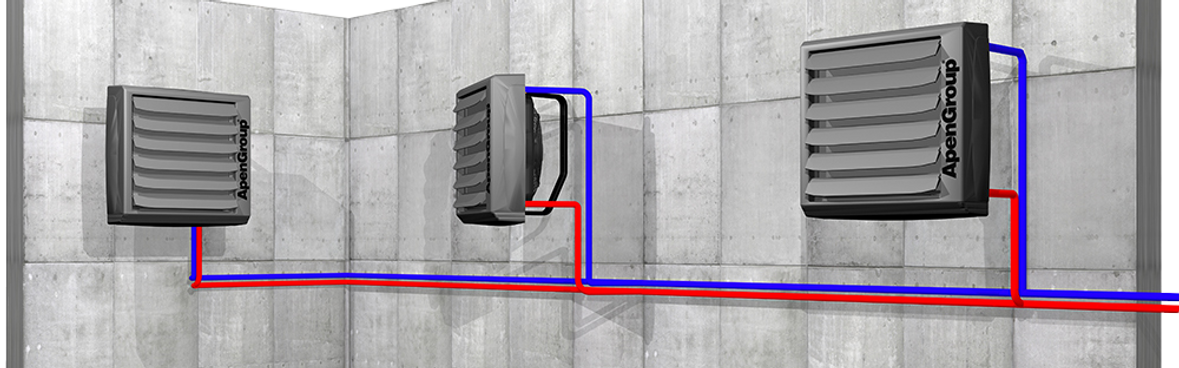
What Are LPHW Unit Heaters and How Do They Work?
LPHW unit heaters work by receiving hot water from a central boiler or heat pump, distributed through pipework to the unit. Inside the heater, the hot water passes through a coil. A fan draws air across the coil, where it picks up heat from the hot water, and blows the warmed air out into the space. The process is simple, proven, and highly effective at delivering consistent, controllable warm air heating across large open-plan buildings.
The hot water can be generated by gas boilers, oil boilers, condensing boilers, air source heat pumps, hybrid heat pump and boiler systems, district heating networks, or electric boilers. This wide compatibility means LPHW unit heaters work with virtually any central heat source, including the latest low-carbon technologies.
Because the heat is generated centrally rather than at the unit, LPHW heaters require no gas connection, no flue, and no combustion at the point of use. This simplifies installation, improves indoor air quality, and means they can be installed in locations where gas-fired unit heaters would not be practical.
Key Benefits of LPHW Unit Heaters
LPHW unit heaters offer a compelling combination of efficiency, flexibility, and low maintenance for commercial and industrial buildings. Here are the key advantages:
-
Efficient heat distribution: LPHW unit heaters rapidly warm large volumes of air, maintaining stable, comfortable working conditions in warehouses, factories, workshops, and other large buildings. Fan-driven distribution prevents cold spots and ensures consistent temperatures throughout
-
Flexible installation: Wall-mounted, column-mounted, or ceiling-suspended to suit challenging layouts. Ceiling-mounted units are popular in warehouses and factories where floor space is needed for racking and operations
-
Low maintenance: No burner, no flue, and no gas safety checks at the unit. Minimal moving parts and robust construction mean less servicing, lower long-term costs, and less operational disruption
-
Compatible with modern heat sources: Works with condensing boilers, heat pumps, hybrid systems, and electric boilers. Upgrade your central plant without replacing the heaters throughout the building
-
Heat pump ready: Connect to air source heat pumps or hybrid systems for lower carbon heating. Start with a gas boiler today and transition to a heat pump in the future without replacing the LPHW heaters
-
No gas or flue at the unit: Combustion happens at the central boiler, not at the heater. This simplifies installation and improves indoor air quality with no combustion products in the heated space
-
EC fan options: EC motors use significantly less electricity, operate more quietly, and allow variable speed control for more precise airflow management
Where Are LPHW Unit Heaters Used?
LPHW unit heaters are particularly well suited to buildings with an existing central boiler or heat pump. Common applications include:
-
Warehouses and distribution centres: Large open-plan spaces where multiple LPHW heaters provide efficient, even heat distribution
-
Factories and manufacturing plants: Production floors needing consistent temperatures with no combustion products in the working space
-
Workshops and vehicle repair bays: Ceiling-mounted units deliver heat without taking up floor or wall space needed for operations
-
Sports halls and leisure centres: Quiet, efficient heating for physical activity and multi-use events
-
Retail, commercial buildings, and garden centres: Back-of-house areas, offices, and open-plan retail spaces connected to a central heating system
Apen AX LPHW Unit Heater
The Apen AX is a durable, high-performance LPHW unit heater designed for demanding commercial and industrial environments. Known for its strong build quality and reliable heat exchangers, the AX is frequently installed in large-scale warehouses, production areas, and workshops where dependable warm air heating from a central hot water source is required.
Key features of the Apen AX LPHW unit heater:
-
Output range from 7 kW to 125 kW, covering small commercial spaces through to large industrial buildings
-
High-quality heat exchangers for reliable, long-lasting performance in demanding environments
-
Strong air throw for effective warm air distribution across large open-plan spaces
-
Multiple mounting configurations including wall, column, and ceiling suspension
-
EC fan option available for lower electrical consumption and quieter operation
-
Heating and cooling modes for year-round climate control from a single unit
Reventon S-3S LPHW Unit Heater
The Reventon S-3S is a modern, lightweight LPHW unit heater offering strong performance in a compact form. Its design makes it ideal for a wide variety of commercial and industrial applications where ease of installation and low weight are priorities.
Key features of the Reventon S-3S LPHW unit heater:
-
Output range from 2 kW to 66 kW, making it suitable for rooms with small to large cubic capacity
-
Lightweight construction weighing just 12 to 25 kg for easy handling and straightforward installation
-
Powder-coated galvanised steel casing for corrosion resistance
-
Available with 1, 2, or 3-row heat exchangers to match different heating demands from the same footprint
-
3-speed fan with IP54 protection for adjustable airflow and efficient heat distribution
-
Dedicated mounting console for multiple installation positions and precise air direction
-
Contemporary design suited to modern commercial and industrial buildings
LPHW Unit Heaters vs Gas-Fired Unit Heaters
When specifying heating for a commercial or industrial building, a common question is whether to use LPHW unit heaters or gas-fired unit heaters. Both deliver warm air, but they suit different situations:
-
Central heat source: LPHW unit heaters require a central boiler or heat pump. Gas-fired unit heaters generate their own heat individually and do not need a central plant
-
Gas at the unit: LPHW heaters need no gas connection or flue at the unit. Gas-fired heaters need a gas supply and flue at each individual unit location
-
Installation complexity: LPHW systems require pipework to distribute hot water from the boiler to each heater. Gas-fired systems require gas pipework and flue routing to each heater. The simpler option depends on the building layout
-
Heat pump compatibility: LPHW heaters connect directly to heat pumps for low-carbon heating. Gas-fired heaters cannot connect to heat pumps
-
Indoor air quality: LPHW heaters produce no combustion products in the heated space. Gas-fired heaters combust fuel inside the building (though modern units are designed to vent products of combustion safely)
-
Maintenance: LPHW heaters have no burner to service at the unit. Gas-fired heaters require annual burner servicing and gas safety checks at each unit
-
Future flexibility: LPHW heaters allow the central heat source to be changed (e.g., boiler to heat pump) without replacing the heaters. Gas-fired heaters are tied to gas as the fuel
The choice typically comes down to whether a central boiler or heat pump already exists (or is being planned), in which case LPHW is the natural choice, or whether individual gas-fired heaters are simpler for the specific building.
Pairing LPHW Unit Heaters with a Hybrid Heat Pump
For businesses looking to reduce their carbon footprint, pairing LPHW unit heaters with the Apen AquaPump hybrid heat pump is an increasingly popular choice. The AquaPump combines an air source heat pump with a condensing gas boiler. The heat pump provides efficient, low-carbon heating during milder weather, while the boiler takes over during extreme cold. The LPHW unit heaters receive the heated water and blow warm air into the building, regardless of which source is active. This delivers lower carbon emissions, lower running costs, and a practical pathway to decarbonisation without a full system replacement.
If you are exploring LPHW unit heaters for your warehouse, factory, workshop, or commercial building, or if you want advice on choosing between the Apen AX and Reventon S-3S, contact Hadar Industries today. Our specialists can assess your building, review the heating load, and recommend the most suitable LPHW configuration for your space.


